



In the highly competitive world of modern brick-and-mortar retail, interior design is a powerful tool for consumer persuasion. Curating a successful luxury boutique or high-end showroom requires moving past product placement and engineering an immersive emotional environment. Retail designers meticulously manipulate space, color palettes, and background acoustics to tell a coherent brand story that captivates consumers.
The most critical component of this atmospheric equation is the retail lighting design. High-fidelity illumination acts as an invisible sales engine: it guides foot traffic through specific merchandise zones, creates structural contrast, accentuates product textures, and evokes premium branding.
Millions of dollars are spent sourcing advanced light-emitting diode (LED) tracks, precise spotlights, and ambient fixtures. However, even the most sophisticated lighting system will fail completely if the surfaces it illuminates are structurally flawed. When expensive light beams hit a poorly finished wall, subtle construction defects are instantly amplified into glaring visual disasters that break the luxury narrative.
1. The Physics of Grazing Light and Imperfection Amplification
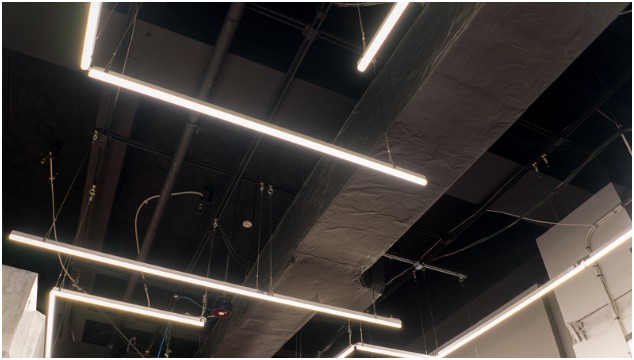
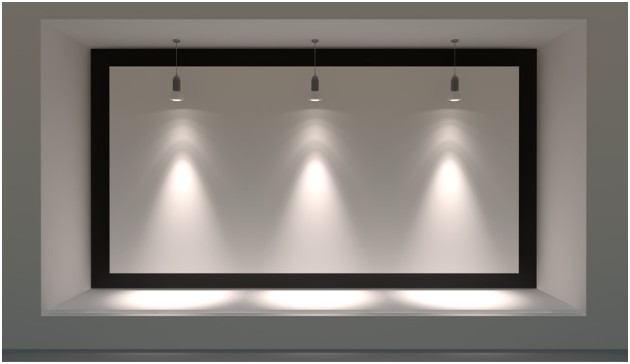
To understand why surface finishing dictates lighting performance, one must look at the mechanical physics of light reflection. High-end retail spaces frequently rely on a technique known as wall-grazing or wall-washing. This involves mounting directional light fixtures close to a wall and casting light downward or upward at a sharp, acute angle. This grazing effect is intentionally designed to wash the wall with a smooth, continuous wave of illumination, creating a sense of clean, architectural depth.
However, casting light at a sharp angle places a heavy structural demand on the underlying drywall. When light strikes a wall parallel to its surface, any microscopic variations in flat plane geometry—such as an over-sanded joint, a slightly protruding seam, or an unfeathered ridge of joint compound—cast long, dark shadows downward.
What looked perfectly smooth under flat, vertical construction lighting suddenly transforms into a chaotic landscape of bumps, pits, and waves under precise retail spot tracks. These shadows visually disrupt the clean lines of the store, distracting the consumer’s eye away from the merchandise and giving the entire retail space a careless, unrefined appearance.
2. Joint Flashing and the Optical Nightmare of Varying Absorbency
Another optical hazard introduced by subpar wall prep is a phenomenon called joint flashing or photographing. Drywall installation naturally introduces two completely distinct materials to a wall face: the raw paper backing of the gypsum board panels and the modified gypsum joint compound used to seal the fasteners and seams.
These two materials possess radically different surface porosities and absorption rates. If the wall is not finished to a rigorous, uniform standard before paint application, the finish coats will absorb unevenly into the substrate. Under intense, high-lumen retail lighting, this variation in absorption alters the gloss texture of the dry paint layer.
When a customer views the wall from an angle, the taped seams will visually “flash” or reflect light differently than the rest of the wall panel, manifesting as ghostly, semi-gloss bands running across otherwise matte surfaces. This structural blemish shatters the premium illusion, signaling poor construction quality to discerning shoppers, and these things should be known while deciding what to expect when hiring a handyman.
3. The Structural Standard Required for High-Performance Illuminations
Eliminating these optical distortions is not a matter of applying thicker coats of paint or attempting to adjust the angles of the light fixtures. It requires a disciplined, multi-stage commitment to premium substrate preparation long before the painters or lighting technicians ever arrive on the job site.
Commercial interiors that utilize critical, high-angle lighting layouts demand a strict Level 5 drywall finish—the highest architectural standard defined by the drywall industry. Achieving this level of visual perfection requires applying a thin high-performance material, continuous skim coat of joint compound across the entire wall face, completely concealing the raw paper texture and equalizing the wall’s porosity.
Executing this sophisticated structural preparation requires a deep understanding of localized environmental demands, commercial material tolerances, and specialized installation techniques. For brands establishing new flagship spaces or expanding storefront footprints in high-density Western retail hubs, partnering with a highly disciplined interior specialty crew is a critical risk-mitigation step.
Securing an expert team for commercial drywall in Utah ensures that large-scale interior wall systems are built straight, structurally sound, and meticulously sanded.
A professional commercial team understands how temperature shifts and settling can induce joint cracking, and they integrate the rigid structural backing and flawless skim coats required to withstand the unyielding scrutiny of luxury point-of-sale spotlight tracks.
4. Compromising Product Presentation and Color Fidelity
The ultimate consequence of a poorly finished wall extends far beyond a simple aesthetic critique of the drywall construction; it directly impacts color fidelity and product presentation. Modern retail lighting is engineered with specific Color Rendering Index (CRI) ratings to ensure that fabrics, jewelry, and cosmetics display their true, vibrant hues.
When light reflects off an uneven, poorly prepped wall, the light waves scatter unpredictably throughout the room, creating localized color casts and unwanted shadows.
If a wall features texture waves or flashing seams, it can bounce distorted light onto nearby display racks, making premium garments look muddy, faded, or inconsistently colored.
This visual distortion erodes consumer confidence, leading directly to lower conversion rates, higher return frequencies, and a severe dilution of the store’s overarching premium identity.
Conclusion
A premium retail space is a highly synchronized performance where architecture, merchandise, and illumination must blend into a singular, flawless consumer journey. High-end lighting tracks are exceptional tools for elevating a brand, but they are entirely dependent on the structural perfection of the canvas they illuminate.
By moving past rushed construction timelines and investing in a true Level 5 commercial finish, retailers can successfully insulate their spaces from visual decay. Securing pristine, perfectly flat substrates ensures that every beam of light behaves exactly as the designer intended, framing your merchandise in a clean world of authentic luxury, refined quality, and uncompromised beauty.
