



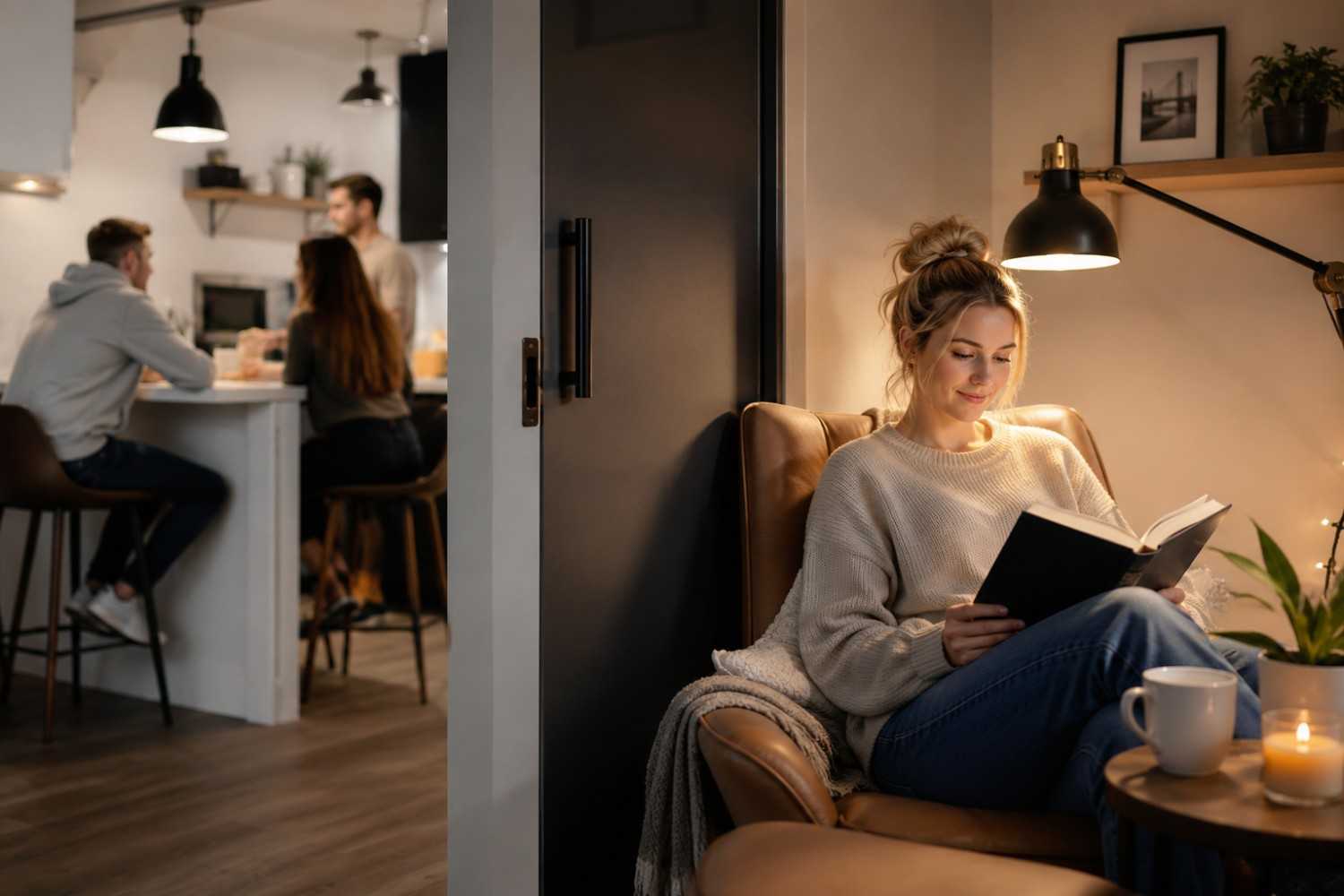
The modern housing landscape has shifted dramatically, driven by shifting economic realities, evolving urban design, and a growing cultural desire for collective community. For young professionals, remote workers, and students, the traditional model of renting an isolated, expensive one-bedroom apartment is increasingly being replaced by co-living arrangements. These setups offer fully furnished spaces, shared high-end amenities, and lower individual overhead costs, making desirable urban areas highly accessible.
However, moving into a shared household introduces a profound psychological and lifestyle challenge: the negotiation of personal privacy. Human beings are inherently social, yet we possess a fundamental biological requirement for solitude to rest, process thoughts, and regulate our nervous systems. When bedrooms, kitchens, and living spaces overlap continuously, it is incredibly easy to feel exposed, leading to spatial anxiety, social fatigue, and housemate friction. Surviving and thriving in a co-living environment does not require extreme isolation; rather, it demands a deliberate, structured approach to boundary setting, spatial engineering, and respectful scheduling habits.
1. Establishing Uncompromising Psychological and Spatial Boundaries
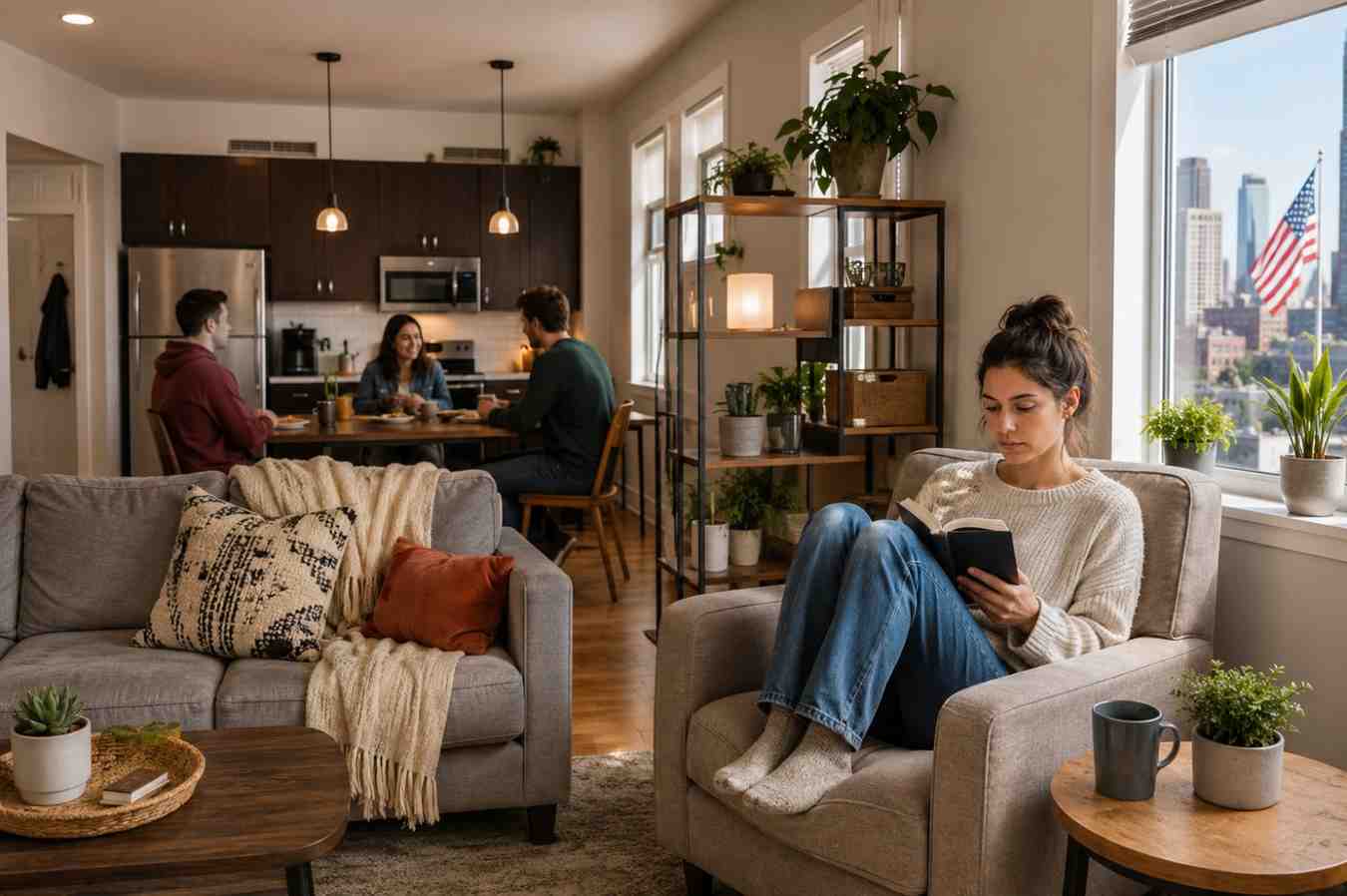
The foundation of a sustainable co-living experience begins with clear, non-negotiable communication before the first box is even unpacked. Many housemates make the critical error of assuming that boundaries will naturally form on their own, leaving expectations unsaid until an intrusive incident causes a household argument.
To prevent boundary friction, shared households must establish a formal “roommate agreement” that clearly defines private zones versus communal property. The bedroom must be treated as an absolute psychological sanctuary—a space where entry is strictly prohibited without explicit, advance permission. Implementing simple, non-verbal signaling systems can radically reduce daily social friction. For example, a simple closed-door policy or a specific hanging tag on a doorknob can universally communicate to the household that an individual is offline, resting, or working, allowing residents to retreat into solitude without feeling the pressure to engage in casual small talk.
2. Choosing Purpose-Built Architecture and Intelligent Layouts
Privacy in a co-living environment is not purely a psychological discipline; it is heavily dictated by the physical blueprint of the home itself. Attempting to force a co-living arrangement into an old, poorly converted single-family house with thin partitions and centralized hallways will inevitably lead to acoustic and spatial privacy breakdowns.
When scouting for a shared housing arrangement, proactive residents actively look for modern architectural designs that prioritize personal space within a collective structure. Individuals relocating to growing secondary tech and commercial hubs often discover that new residential developments are specifically engineered with this lifestyle balance in mind. For instance, teams exploring options like modern townhomes in Idaho Falls will find layouts that feature multi-level zoning, where private bedrooms and dedicated en-suite bathrooms occupy completely separate floors from the primary kitchen and entertainment areas. This vertical separation of space creates an exceptional structural sound barrier, ensuring that an individual can sleep or study in absolute peace while housemates host a gathering on a lower level. Sourcing homes with clever structural partitions and acoustic insulation ensures that community and privacy can coexist seamlessly. Similar benefits can also be achieved through an expert home renovation, where thoughtful space planning and structural improvements help create a better balance between shared living and personal privacy.
3. Mastering Acoustic Control and Digital Isolation
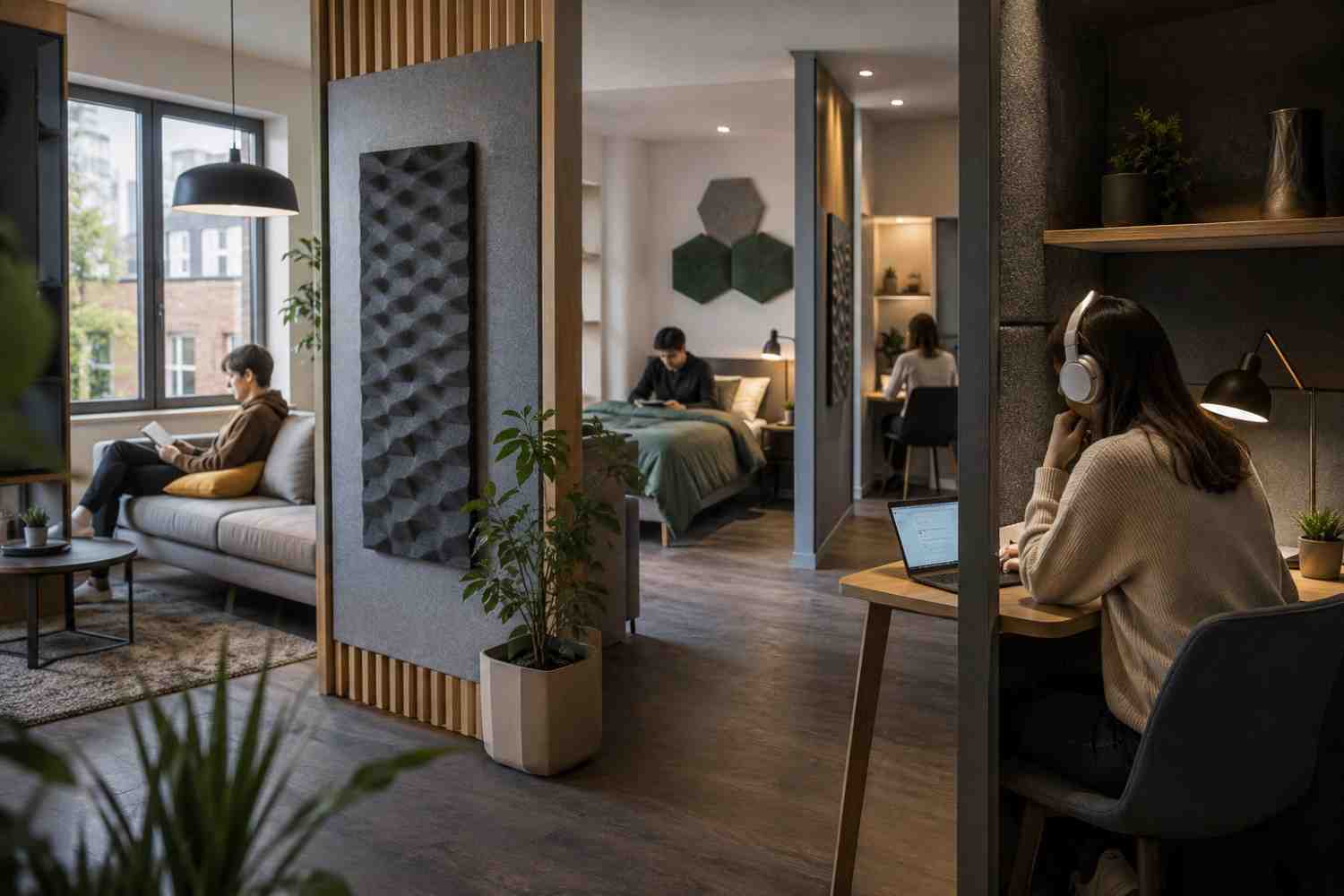
In any shared living arrangement, sound is the most invasive element. The hum of a television in the living room, the clinking of dishes in the kitchen during an early morning shift, or foot traffic down a shared hallway can easily breach a bedroom door, keeping your mind in a state of low-grade, defensive awareness.
Conquering acoustic intrusion requires investing in high-quality isolation tools. Utilizing heavy, density-focused acoustic door seals and thick blackout curtains can dramatically reduce ambient sound bleed. For absolute cognitive isolation during remote work or deep rest, high-fidelity noise-canceling headphones are a mandatory modern survival tool. Additionally, deploying a mechanical white noise machine or a dedicated ambient sound app inside your bedroom creates a protective sonic blanket. This low-frequency hum masks irregular household noises, allowing your brain to fully disengage from the surrounding collective environment and fall into restorative sleep.
4. Engineering Collaborative Temporal Scheduling
A major point of domestic friction in co-living homes occurs when multiple residents attempt to utilize the exact same high-value communal utility—such as the primary meal preparation line or laundry facilities—at the exact same peak hours. These physical bottlenecks lead directly to cramped spaces, rushed routines, and a total loss of personal peace.
Resilient households bypass this logistical traffic jam by implementing collaborative temporal scheduling. Utilizing shared digital calendars to block out specific windows for high-intensity tasks prevents spatial crowding. If one housemate prefers to execute complex meal prepping on Sunday mornings, others can intentionally schedule their kitchen usage for the afternoon. Creating a structured, predictable rhythm for shared spaces ensures that every resident can enjoy moments of quiet, unhurried utility, transforming a potentially chaotic environment into a calm, predictable ecosystem.
Conclusion
Surviving a co-living arrangement without losing your personal privacy is a meticulous, deliberate discipline of environmental curation and personal mindfulness. It requires a household to move away from passive assumptions and actively engineer clear spatial boundaries, select intelligent multi-level layouts, deploy acoustic damping tools, and respect temporal schedules. By prioritizing personal solitude with the same energy dedicated to building a collective community, you can successfully dismantle the friction of shared housing. Investing in these privacy safeguards ensures you can navigate your living situation not from a place of chronic exhaustion, but from a resilient foundation of authentic energy, mental clarity, and lasting personal comfort.
