



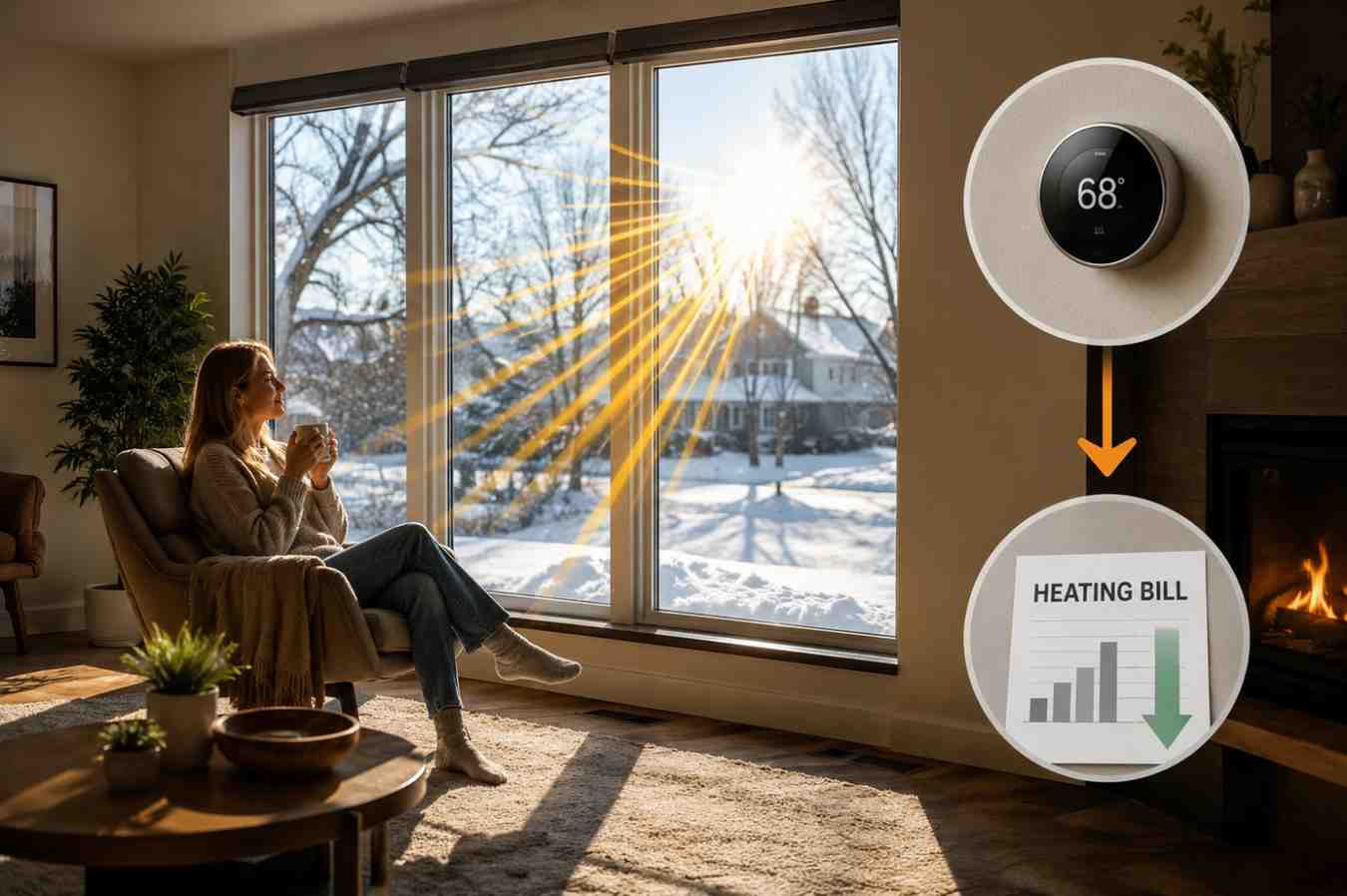
When the temperature drops and winter settles in, most homeowners brace themselves for the inevitable spike in utility costs. We check our furnace filters, program our thermostats, and seal up drafty doors. Yet, one of the most powerful heating elements available to us is entirely free, completely silent, and sitting right outside our windows: the sun.
Using natural sunlight placement to warm a home is an ancient architectural concept that has evolved into a modern, high-performance science. Known as passive solar design, this practice involves capturing the sun’s energy through deliberate home positioning and materials without relying on complex mechanical systems. By understanding how to invite the winter sun into your living space, you can naturally lower your reliance on the furnace and cut your heating bills down to size.
1. Master the Physics of Solar Orientation
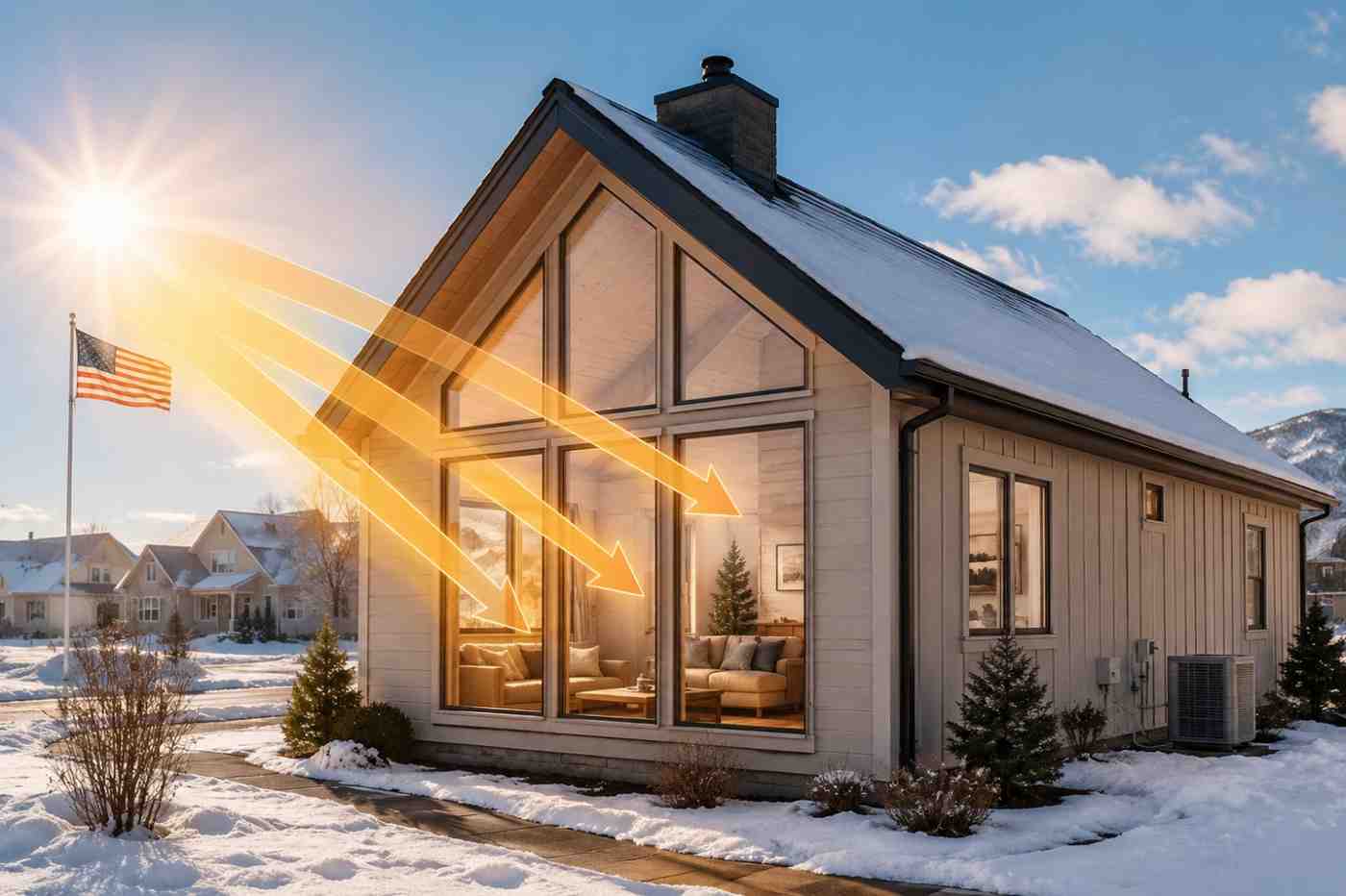
The foundation of slashing your heating bill with sunlight starts with how your home faces the horizon. In the northern hemisphere, the sun sits low in the southern sky during the cold winter months. This means your southern-facing walls and windows receive the most direct, intense sunlight of the day.
To capitalize on this free heat, a home should ideally be oriented so its longest axis runs from east to west. This maximizes the surface area facing directly south. If you are building from scratch or planning a major renovation, working with experienced architecture firms in Salt Lake City can help you perfectly align your floor plan to match local geographical solar paths, ensuring you capture every available winter ray.
2. Optimize Window Placement and Glazing
Windows are the primary gateways for solar heat gain, but they can also be notorious sources of heat loss if chosen incorrectly. The trick to passive solar heating is putting the right windows in the right places. You want a high concentration of glass on the southern side of the house to let the light in, and minimal glass on the north side to prevent warmth from escaping.
The type of glass matters immensely. For southern windows, you want glass with a high Solar Heat Gain Coefficient (SHGC), which measures how much solar radiation passes through the window. On the northern and western sides, where the winter sun rarely hits, you should prioritize low-E coatings and triple-pane insulation to trap the existing indoor heat inside your living envelope.
3. Utilize Thermal Mass to Store the Warmth
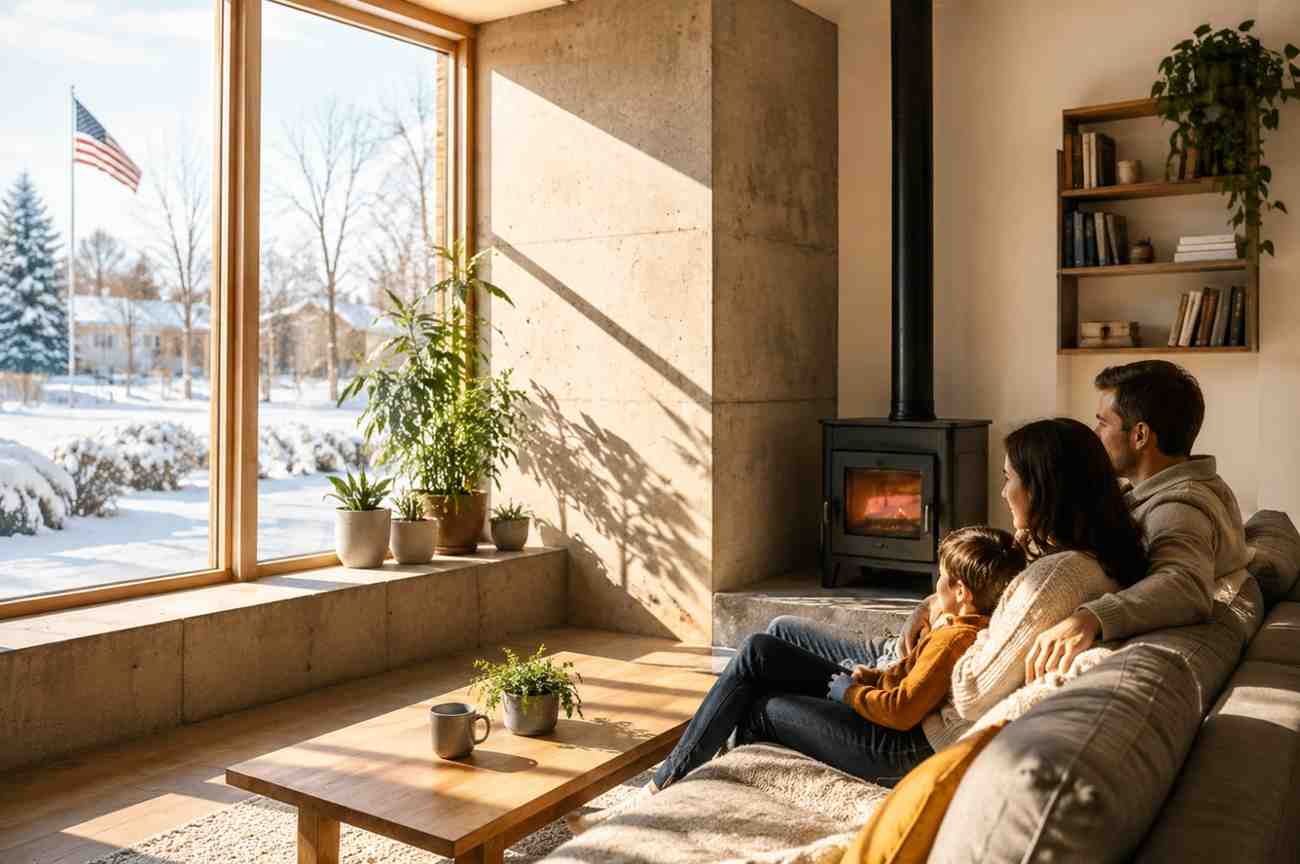
Letting sunlight into your home is only half the battle; you also have to keep that heat from instantly dissipating. If your sunlight hits a plush carpet or light drywall, the air will warm up quickly but cool down the moment the sun goes down. To prevent this, passive solar design relies on thermal mass.
Thermal mass refers to heavy, dense materials that absorb heat during the day and radiate it back out slowly as the room cools. Materials like concrete, brick, stone, and ceramic tile are excellent at storing thermal energy. Placing a beautiful dark stone floor or a brick accent wall directly in the path of your southern windows creates a natural battery that keeps your home warm long after sunset.
4. Control the Light with Smart Overhangs
A common concern with maximizing sunlight placement is what happens when winter ends. No one wants their home to turn into an absolute greenhouse during the sweltering summer months. Fortunately, the sun’s natural geometry solves this problem for us if we plan ahead with proper roof overhangs.
Because the sun travels much higher in the sky during the summer, properly calculated roof eaves or awnings will completely shade your southern windows from the harsh overhead summer light. When winter arrives, and the sun drops closer to the horizon, the sunlight passes cleanly underneath those same overhangs, flooding your home with deep, penetrative warmth exactly when you need it most.
5. Design an Open Floor Plan for Air Circulation

Capturing heat in your southern rooms won’t do much good if the rest of your house remains an icebox. For natural sunlight placement to effectively lower your overall heating bill, that trapped warmth needs to circulate throughout the rest of your living space.
An open-concept floor plan naturally allows warm air to flow freely from room to room without getting blocked by interior walls. You can further assist this natural convection by using ceiling fans set to a low, clockwise rotation to gently push the rising warm air back down to the living zone, ensuring an even temperature gradient across the entire household. For homeowners planning renovations or new construction, incorporating wiring a new home best practices for safety during the design stage can also help create a more efficient and future-ready living environment.
Conclusion
Cutting your winter heating bills through natural sunlight placement shifts the burden of climate control from expensive mechanical systems back to smart architectural geometry. By aligning your home with the natural path of the sun, using high-performance glass, and storing that energy in dense thermal materials, you create a sustainable loop of free warmth. Ultimately, saving money on winter utilities isn’t just about insulating yourself from the cold outside; it is about intentionally designing your environment to embrace the natural energy that the winter sun provides every single day.
